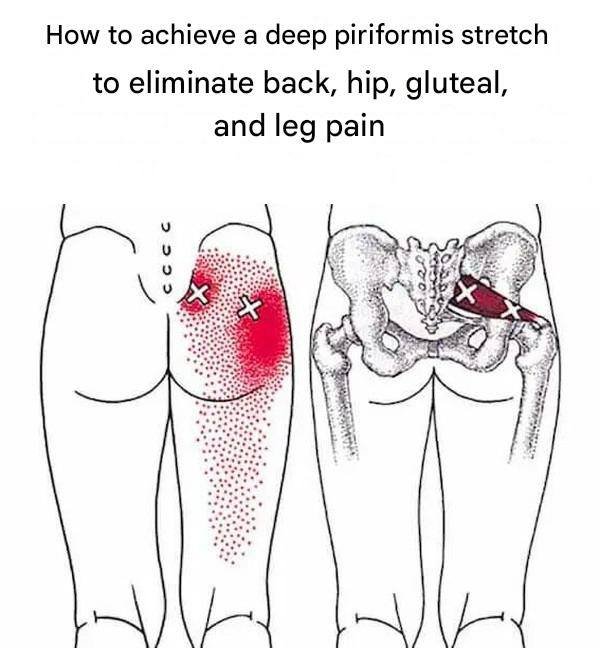
6. Initial Treatment Strategies
Once diagnosed, initial treatment for piriformis syndrome aims to reduce muscle tightness, alleviate nerve compression, and restore normal function. Early interventions typically include:
- Activity modification: Avoiding prolonged sitting and activities that exacerbate symptoms.
- Use of anti-inflammatory medications: Nonsteroidal anti-inflammatory drugs (NSAIDs) may help reduce inflammation and pain. Consult your prescriber before use.
- Physical therapy: Focused on stretching tight muscles, improving flexibility, and strengthening weak muscle groups.
- Heat and cold therapy: Alternating heat to relax muscles and cold to reduce inflammation can be beneficial.
In some cases, corticosteroid injections into the piriformis muscle may be considered to reduce severe inflammation, but this should be performed by a qualified professional.
7. Foam Rolling Techniques
Foam rolling is a form of self-myofascial release that can effectively loosen tight muscles and fascia surrounding the piriformis. When performed correctly, it helps alleviate muscle tension and may reduce sciatic nerve irritation.
- Foam Roll Piriformis: Sit on a foam roller placed under one hip. Cross the ankle of the affected side over the opposite knee. Slowly roll back and forth over the area just beneath the pelvis and above the thigh. Pause on tender spots for about 30 seconds to encourage muscle relaxation.
- Foam Roll Quadriceps: Lie face down with a foam roller under the front of your thighs. Support your upper body with your forearms and slowly roll from the hip to the knee, pausing on tight areas.
- Foam Roll Iliotibial (IT) Band: Lie on your side with the foam roller under the outer thigh. Place the upper leg in front for support and roll slowly from the hip down to the knee, pausing on painful spots.
These foam rolling techniques should be performed gently and within your pain tolerance. Over-aggressive rolling can cause bruising or irritation.
8. Effective Piriformis Stretches
Targeted stretching can improve flexibility and reduce piriformis tightness. Some effective stretches include:
- Piriformis Stretch: Lie on your back with both knees bent. Cross the ankle of the affected leg over the opposite knee. Gently pull the uncrossed leg toward your chest while pushing the crossed knee outward. Hold this position for about 30 seconds.
- Hamstring Stretch: Lying on your back, bend one knee to 90 degrees and slowly extend the leg upward until you feel a stretch in the back of your thigh. Hold for 30 seconds.
- Hip Flexor Stretch: Kneel on one knee with the other foot placed in front at a 90-degree angle. Tighten the glute muscles of the kneeling leg and shift your hips forward. Raise the arm on the same side as the kneeling leg and hold for 30 seconds.
Perform these stretches regularly, ideally daily, to maintain muscle length and reduce pressure on the sciatic nerve.